
News & Articles
How Geopolitical Tensions Are Shaking Bitcoin
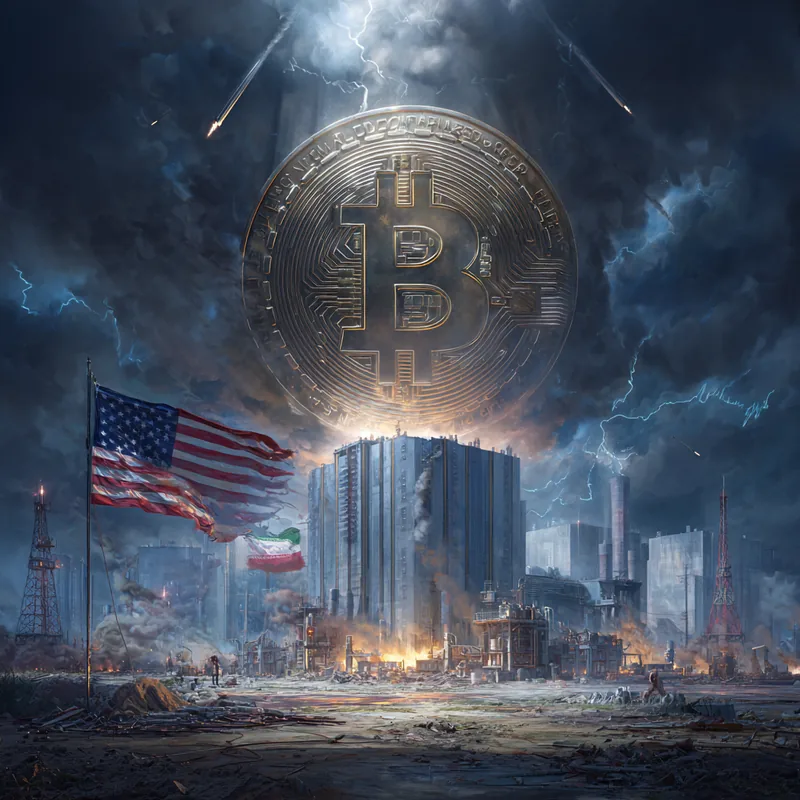
Bitcoin was created in the aftermath of the 2008 financial crisis as a decentralized alternative to fiat currencies. Its appeal lies in its independence from governments, banks, and borders. But as digital assets gain institutional adoption and global relevance, they are increasingly influenced by real-world geopolitical events.
From currency devaluations to full-blown wars, today’s geopolitical landscape is shaping Bitcoin’s behavior in ways investors can’t afford to ignore.
U.S. Bombs Iran’s Nuclear Sites — Crypto Markets React Swiftly
The latest flashpoint occurred on June 22, 2025, when the U.S. launched coordinated airstrikes on Iran’s nuclear facilities at Fordow, Natanz, and Isfahan. The operation, dubbed “Midnight Hammer,” marked the most dramatic escalation in Middle East tensions in over a decade.
Former President Donald Trump took to Truth Social shortly after, stating:
“We know exactly where the so-called ‘Supreme Leader’ is hiding. He is an easy target, but he is safe there—we are not going to take him out (kill!), at least not for now… Our patience is wearing thin.”
He called for Iran’s unconditional surrender and urged Tehran residents to evacuate. The White House confirmed an emergency National Security Council meeting, and Trump cut short a G7 summit to focus on the crisis.
Market reaction was immediate and severe.
- Bitcoin plunged to under $99,000—its lowest level in over a month.
- Ethereum dropped over 10%, dipping below $2,200.
- More than $595 million in long positions were liquidated across crypto exchanges in just 24 hours.
Over 172,000 traders were liquidated, including $151 million in Bitcoin and $282 million in Ethereum positions. This was one of the largest liquidation events of 2025 to date.
Oil, Inflation, and Market Sentiment
As news of the bombings spread, oil prices surged toward $75/barrel, with analysts warning that Iran’s threats to close the Strait of Hormuz—a critical oil shipping channel—could send prices well above $100. Such a spike would likely trigger renewed inflationary pressure, disrupt supply chains, and potentially delay the Federal Reserve’s plans for rate cuts.
“Should Israeli or U.S. military actions impact Iran’s oil production, a spike in oil prices could follow, fueling renewed inflationary pressures,” noted Matteo Greco, senior analyst at Finequia.
“The geopolitical situation remains a wildcard; any credible de-escalation could serve as a significant risk-on catalyst, while a further deterioration would likely trigger another move down across risk assets,” added Javier Rodriguez-Alarcón, CIO at XBTO.
Crypto’s Dual Personality: Safe Haven or Risk Asset?
In this high-stakes environment, crypto is once again showing its split personality:
- As a risk asset: Bitcoin initially dropped alongside equities in a broad “risk-off” move.
- As a safe haven: Within 24 hours, Bitcoin rebounded to over $101,000, and Ether climbed back above $2,250, signaling renewed investor interest amid global instability.
This reflects a growing recognition that crypto may serve as both a speculative asset and a hedge against geopolitical and monetary instability, depending on the nature of the crisis.
Sanctions, Censorship, and Decentralized Finance
As tensions rise, the U.S. is also expected to expand sanctions on Iran. In response, Iran has increasingly turned to blockchain technologies and crypto to bypass traditional financial systems—often through state-linked wallets and exchanges.
While Bitcoin’s public ledger makes it a poor tool for hiding large-scale transactions, its decentralized nature continues to attract users in sanctioned regions seeking financial autonomy.
For investors, this has two implications:
- Stronger Global Demand for Crypto: Especially in emerging or unstable economies.
- Greater Regulatory Scrutiny: Governments may crack down on privacy coins, DeFi protocols, and non-KYC exchanges.
What Should Crypto Investors Do?
1. Stay Informed
Monitor geopolitical developments alongside crypto charts. Armed conflicts, sanctions, and diplomatic shifts can all move markets.
2. Use Cold Storage for Core Holdings
If exchanges are impacted by sanctions or cyberattacks, having your crypto in cold storage ensures access and security. (All crypto assets held by Coin IRA account holders are already in cold storage.)
3. Prepare for Volatility
Extreme news cycles can trigger both panic selling and rapid rebounds. Set price alerts and consider dollar-cost averaging during high-volatility periods.
4. Watch Oil and Inflation
If oil prices spike and inflation returns, crypto—especially Bitcoin—may benefit as a hedge.
5. Diversify
Consider exposure beyond Bitcoin, including Ethereum and stablecoins, but be cautious with high-risk altcoins and privacy tokens amid regulatory scrutiny.
Crypto’s Role on the World Stage Is Growing
The U.S. strike on Iran’s nuclear program underscores how deeply intertwined global politics and crypto markets have become. Bitcoin is no longer just a speculative play—it’s a politically relevant, system-resilient asset that reacts in real time to major geopolitical developments.
Crypto markets passed a stress test during this most recent escalation. While volatility remains high, investor interest has not wavered—and may even increase as traditional systems look more fragile in times of war and uncertainty.
Coin IRA makes it easy to invest in Bitcoin and other cryptocurrencies through a secure, tax-advantaged Crypto IRA or a flexible Individual Trading Account. Whether you’re protecting your retirement or diversifying your portfolio, our team is here to help you navigate turbulent markets with confidence.
Contact us today to learn more about adding crypto to your retirement strategy.