
News & Articles
Why Are There So Many Cryptocurrencies?
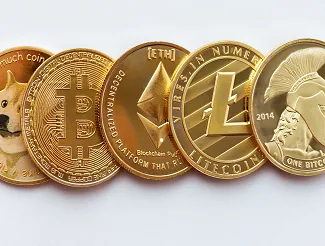
There are so many cryptocurrencies because blockchain software can be copied, modified, and launched for different purposes. Developers create new networks to test technical designs, support applications, change governance rules, or serve a particular community. Businesses and promoters also issue tokens to raise capital, encourage participation, or speculate on market demand.
The result is a market with thousands of crypto assets—but quantity does not imply quality. Many projects become inactive, lose liquidity, fail technically, or never develop meaningful use.
Different Cryptocurrencies Are Built for Different Jobs
“Cryptocurrency” is a broad label. Assets commonly fall into several overlapping categories:
- Payment and store-of-value assets: designed primarily to transfer or hold value.
- Smart-contract platforms: networks that execute programs and support decentralized applications.
- Stablecoins: tokens designed to track a reference asset such as the U.S. dollar, using reserves, collateral, or algorithms.
- Utility tokens: assets used to pay for a service, access a network, or receive an incentive.
- Governance tokens: assets that may allow holders to vote on protocol decisions.
- Privacy-focused assets: networks designed to limit the public visibility of transaction details.
- Tokenized assets: blockchain-based representations of another asset or contractual right.
These labels are not legal classifications, and a single asset may fit more than one category.
Open-Source Software Makes New Projects Easier to Launch
Much of the software used by blockchain networks is open source. A development team can study an existing project, reuse permitted code, and change features such as block timing, issuance, governance, privacy, or the consensus mechanism.
Some networks begin through a “fork,” where participants adopt a different version of existing software. A fork can result from a technical upgrade, a disagreement about governance, or an attempt to create a new asset. Other projects build entirely new networks or issue tokens through an existing platform rather than operating an independent blockchain.
Blockchains Make Different Technical Trade-Offs
Networks make choices involving decentralization, security, speed, cost, privacy, programmability, and energy use. Improving one characteristic may affect another. For example, increasing transaction throughput can require more powerful hardware, which may reduce the number of participants able to validate the network.
There is no universally best design for every use. A network optimized for high-value settlement may make different choices from one built for games, payments, data storage, or smart-contract applications.
Tokens Can Coordinate Participation
A token can be used to compensate validators, pay network fees, reward users, fund development, or distribute governance rights. These incentives can help a network grow, but they can also encourage short-term speculation. Projects with aggressive token rewards may appear active until those incentives decline.
Market Demand Encourages Experimentation—and Copycats
Strong interest in cryptocurrency attracts legitimate developers and opportunistic promoters alike. A popular idea can produce dozens of competitors. Some improve on the original; others rely mainly on branding, celebrity promotion, or fear of missing out.
Creating a token is much easier than creating a secure network, a useful product, sustainable economics, and lasting demand. This gap explains why the number of cryptocurrencies can grow even while many older projects disappear.
Why Most Cryptocurrencies Are Not Equivalent
A token’s low unit price does not mean it is inexpensive, and a large maximum supply does not by itself mean it is overvalued. More useful questions include:
- What is the project used for today?
- Does it need a token to function?
- How much supply circulates, and when will additional units unlock?
- Who holds the tokens and controls governance?
- How is the network secured?
- Is the code actively maintained and independently reviewed?
- Where does liquidity come from?
- What legal, custody, and counterparty risks apply?
Our guide to how cryptocurrency gains value explains how supply, utility, liquidity, security, and sentiment can influence price.
Choosing Assets for a Cryptocurrency IRA
A retirement account does not make a crypto asset less volatile or eliminate the risk of loss. Availability may also be narrower than the overall market because a provider and custodian must be able to support trading, recordkeeping, and secure custody.
Before making a decision, review the cryptocurrencies available through Coin IRA, understand how assets are custodied, and learn the basics of a cryptocurrency IRA.
This article is for educational purposes and does not recommend any cryptocurrency. Crypto assets are volatile and may lose value.