
News & Articles
Why Deflationary Assets Like Bitcoin, Ethereum, and Gold Belong in Your Portfolio During Inflationary Times
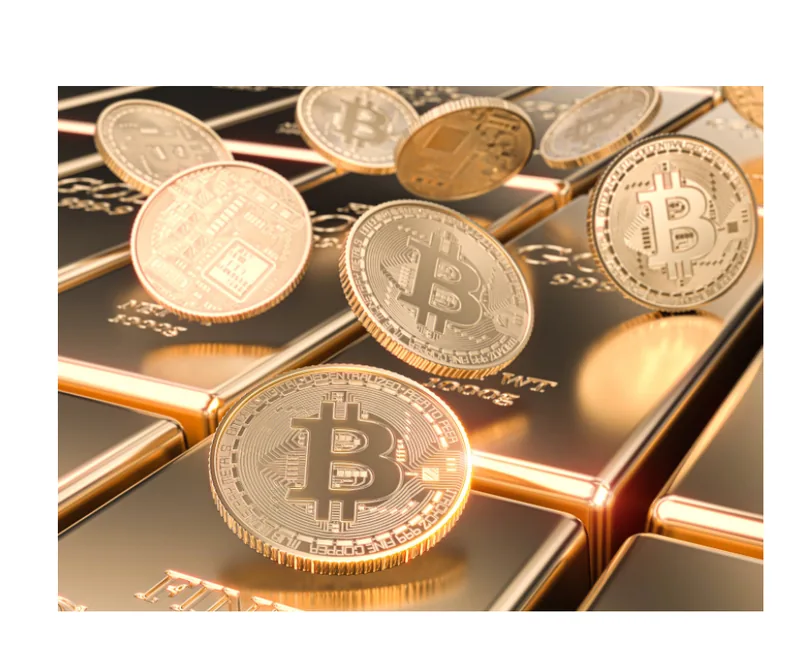
When inflation eats away at the value of your dollars, traditional cash savings can quietly erode. As consumer prices rise, your purchasing power drops—making it more important than ever to hold assets that retain or grow in value over time. That’s where deflationary assets come in.
In this article, we’ll break down why Bitcoin, Ethereum, and physical gold are three of the most powerful tools to help investors combat inflation and preserve long-term wealth.
What Are Deflationary Assets?
Deflationary assets are assets with a limited or decreasing supply. Unlike fiat currencies, which central banks can print in unlimited quantities, deflationary assets are inherently scarce. This scarcity can create upward pressure on value, especially in inflationary environments. In other words, while the dollar weakens, deflationary assets can strengthen, so they could also be called inflation-resistant.
1. Bitcoin: Digital Gold with a Fixed Supply
Bitcoin (BTC) is the original deflationary digital asset, with a hard-coded maximum supply of 21 million coins. No government or central bank can print more Bitcoin. That makes it a unique asset in a world awash in stimulus and money printing.
Why Bitcoin Helps in Inflationary Times:
- Limited Supply: Only 21 million BTC will ever exist.
- Decentralized: Immune to government manipulation or monetary policy.
- Globally Recognized: Accepted as a store of value and increasingly as a hedge against inflation.
- High Liquidity: Easy to buy, sell, or hold in retirement accounts through a Crypto IRA.
During the 2020–2022 period of soaring inflation, Bitcoin attracted both retail and institutional investors as a “digital gold” alternative. Its long-term price history shows a strong upward trajectory, driven largely by demand meeting fixed supply—a classic deflationary profile.
2. Ethereum: Smart Contract Utility Meets Supply Reduction
While Ethereum (ETH) was not originally deflationary, its transition to proof-of-stake in 2022 introduced a powerful new feature: ETH burn. A portion of transaction fees is now permanently removed from circulation, and when network activity is high, Ethereum can become net-deflationary.
Why Ethereum Matters for Investors:
- Smart Contract Dominance: Powers most decentralized apps (DeFi, NFTs, etc.).
- Decreasing Supply: After the Merge, ETH supply has started to shrink.
- Institutional Adoption: ETFs, staking platforms, and DeFi growth are driving demand.
- Future-Proof: Upgrades continue to improve speed, scalability, and sustainability.
Ethereum combines the benefits of a deflationary asset with real-world utility, making it an increasingly attractive inflation hedge for savvy investors.
3. Physical Gold: The Original Store of Value
Gold has served as a trusted store of value for thousands of years, and for good reason. It can’t be printed, inflated, or erased by digital manipulation. In fact, during every major currency crisis—from the fall of the Roman Denarius to modern hyperinflationary episodes—gold has preserved wealth when fiat currencies have not.
Gold’s Benefits in an Inflationary Economy:
- Scarcity: Gold is finite, expensive to mine, and physically durable.
- Tangible Asset: No counterparty risk; no digital dependencies.
- Globally Valued: Gold has universal acceptance and liquidity.
- IRA Eligible: Can be held in a Precious Metals IRA for tax-advantaged growth.
While gold doesn’t offer the explosive growth potential of Bitcoin or Ethereum, it provides stability and time-tested value preservation, making it a core holding during uncertain economic times.
Why You Should Diversify with Deflationary Assets Now
The U.S. money supply increased dramatically in recent years, while interest rates have struggled to keep pace with inflation. Investors who hold large amounts of cash or low-yield savings accounts may be losing purchasing power every day.
Here’s what holding deflationary assets offers instead:
- Protection from inflationary erosion
- Scarcity-driven price appreciation
- Portfolio diversification
- Long-term wealth preservation
Even better, you can hold Bitcoin, Ethereum, and physical gold in your retirement account through a self-directed IRA, allowing you to enjoy tax-deferred or tax-free gains while insulating your nest egg from inflation.
Add Deflationary Assets Today
Inflation is a silent tax on your wealth—but you don’t have to sit back and let it happen. By adding deflationary assets like Bitcoin, Ethereum, and gold to your portfolio, you’re taking a proactive step toward financial security in uncertain times.
These assets are not just speculative plays—they’re long-term stores of value backed by scarcity, utility, and global demand.
Interested in holding Bitcoin, Ethereum, or physical gold in your IRA?
Coin IRA offers a secure, IRS-compliant way to invest in deflationary digital and precious metal assets through your retirement account.
Contact us today to learn more about diversifying your investment portfolio with inflation-resistant assets.